.png)
- info@fitindiatrust.org
- +91-7999567519
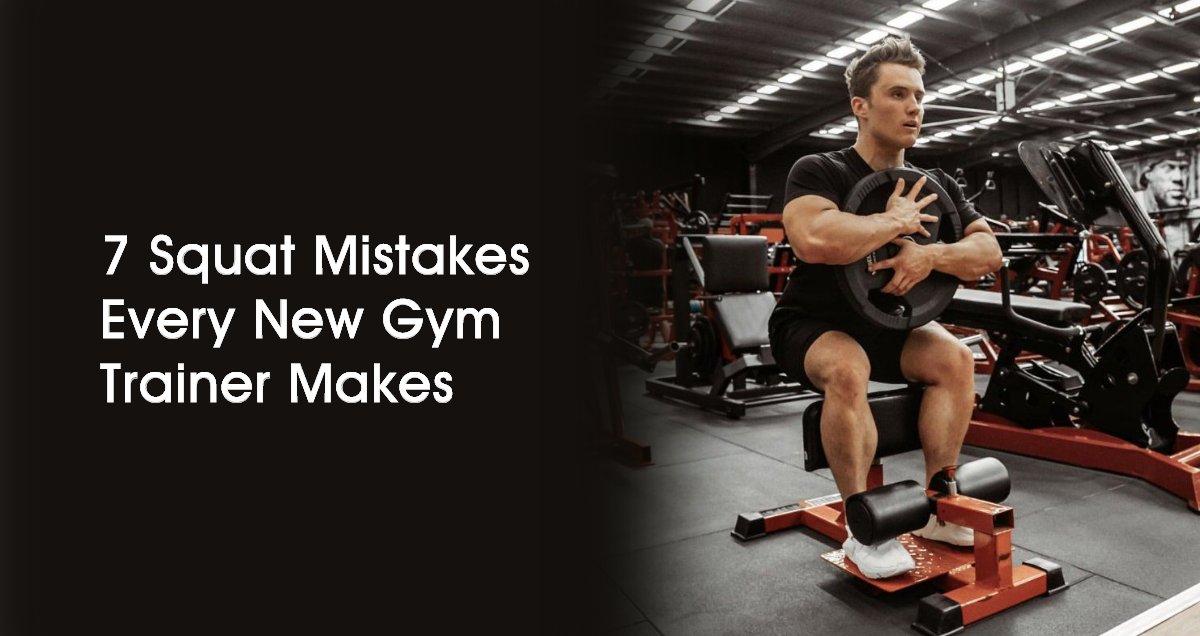
7 Squat Mistakes Every New Gym Trainer Makes.edited
Squats are one of the best exercises for building strength, flexibility, balance, and coordination. But repeating some common workout mistakes for beginners makes them detest this workout forever. With a lack of awareness and poor posture, they hurt themselves severely, resulting in over 55% of workout injuries within the first 3 months. So, if you aspire to be a gym trainer, you must know what not to do while training squats. This guide will help you with a complete understanding.
Why Squat Technique Matters for Beginners
A beginning trainee will be more likely to suffer an injury due to a lack of balance and poor posture. A lot of the common workout errors for beginning trainers stem from imbalances in movement and stability, which can also be caused by poor technique. So, when you train in your gym, you will have to be conscious of these common workout mistakes for beginners.
You will have to ensure that the hips, knees, and ankles distribute the body load. With a proper understanding of biomechanics and movement principles, you can train better coordination and control for your clients. Therefore, trainers should complete a professional fitness education course to upskill their knowledge.
7 Common Workout Mistakes for Beginners When Doing Squats
The most common workout mistakes for beginners do not occur just because you are taking it casually. Even well-intentioned trainers can fall prey to bad habits when they train without realizing it. These squat mistakes are frequently present due to rushing progress or skipping foundational knowledge.
1. Wrong Foot Position
The most obvious example of bad foot positioning is when beginners place their feet too wide or too close together. Both of these foot placements alter the ability to maintain balance. This means that the knees are forced to compensate for that displaced weight. The foot position should be shoulder-width apart, with the toes slightly turned outward.
Trainers need to teach their clients to find an appropriate foot position, one that allows for natural movement and shock absorption. Trainers can help their clients address these issues from day one by holding on-site training workshops and participating in practical coaching sessions.
2. Knees Caving Inward
Knee valgus is a significant red flag and is another common workout mistake for beginners. It increases stress on the knees while decreasing the power output. The most common causes are weak glutes and a lack of awareness. Trainers should cue that the knees are tracking outward and provide activation drills to create stability.
By attending functional training workshops, aspiring trainers can learn the perfect ways to provide a corrective exercise. This will allow trainers to instruct properly for a correct knee valgus without overwhelming new clients.
3. Poor Squat Depth Control
In many cases, the reason most novices fail to achieve maximum squats is that they go too high or go too low to avoid injury. The hips should be lowered to a point where they can be pushed just below the level of the knees while still maintaining control of the movement.
To help newcomers develop confidence and consistency when going low, it is recommended to introduce regressions such as box squats. Trainers should conduct a comprehensive movement assessment. This will allow them to provide customized guidance regarding how low each trainee can safely squat.
4. Rounding or Overarching the Lower Back
The squat requires the spine to be neutral to perform safely. Many beginners lack core strength and protective bracing techniques. These common workout mistakes for beginners cause them to either round their back or overarch excessively. Proper instruction on how to brace, breathe, and properly position themselves will protect their lower back and allow them to transfer force properly.
Trainers need to reinforce awareness of their posture beginning from day one. Trainers educated in biomechanical principles can help them understand spinal alignment in greater depth. This will help them to teach the ways to engage core muscles correctly.
5. Improper Load Positioning
When barbells or dumbbells are moved out of position, your center of gravity gets shifted excessively forward. This excessive forward position will create excessive leaning and instability while performing the squat. Therefore, while progressing from bodyweight squats to weighted squats, trainers should check their client’s mastery, avoiding the common workout mistakes for beginners.
They should work with clients to keep the location of their load as close to the middle of their foot as possible. They should develop proper techniques for placing loads in the correct location.
6. Rushing Through the Squat
When squat reps are rushed, it compromises the proper buildup of the right momentum. Controlled tempo improves coordination and builds strength. Ideally, slow eccentric phases should be taught to all beginner lifters so they can develop control and stability. Trainers should focus on the quality of the repetition rather than speed when beginning to teach squat technique.
Professional trainers should emphasize movement quality rather than speeding up the number of squats. This will eventually make every squat effective for the trainee.
7. Skipping Warm-Up and Mobility Work
Among other common workout mistakes for beginners, neglecting proper warm-up is a significant one. Tight hips and ankles will create a limitation to squat depth and increase the risk of injury. To prepare muscles and joints to perform the squat effectively, a dynamic warm-up is essential. Therefore, trainers must never overlook this aspect of training.
In any fitness education course, you will get a dedicated emphasis on practicing a proper warm-up routine. This is an integral step in every exercise routine in order to be safe and effective.
Conclusion
A proper and correct manner of performing squats will help develop strength. However, if the common workout mistakes for beginners are repeated, they will limit their ability to progress. Individuals who have access to professional coaching will create safer habits and build stronger foundations, creating sustainable fitness successes.
FAQs
-
How often should a beginner squat?
Beginners should perform 2-3 squats per week, with sufficient recovery days in between workouts. This helps the body and joints adapt to the new stimulus while avoiding the common workout mistakes for beginners.
-
What’s the best way to correct squat form?
Mirrors, video analysis, and cues from professionals will help measure the common workout mistakes for beginners. With proper coaching guidance and movement assessments, one can quickly learn and improve posture.
-
Should beginners use weights?
Before adding weights, beginners must first develop a base of stability and control through the performance of bodyweight squats. After developing consistent use of proper mechanics, beginners may progress to the addition of weights.
Popular Posts
-
-
7 Squat Mistakes Every New Gym Trainer Makes.edited
27 Jan 2026 -

Understanding Your Body Type: The Science Behind Personalised Fitness Training
23 Jan 2026 -
.png)
How ACE Personal Trainer Certification Sets Global Standards in Fitness Education
23 Jan 2026 -
Smart Training Techniques Every Athlete Should Know for Injury Prevention
23 Jan 2026